Winter Money: Snow Removal Economics From Shovel to Plow
The full economics of snow removal as a weekend business in 2026: what driveways pay per push, the shovel-blower-plow equipment ladder with real prices, per-push vs. seasonal contract math, and the 3 a.m. reality nobody prices in.
Worked examples from researched US prices — educational information, not financial, tax or legal advice. Full disclaimer
On this page6 sections
If you run a mowing route, you already own a snow business — you just haven't bought the second machine yet. Same customers, same driveways, same route-density math that decides everything. October is exactly when to set it up, because snow customers sign before the first flake, not after.
But snow is not "lawn care, colder." The demand shows up violently and at terrible hours, the pricing models carry real risk in both directions, and the liability picture includes a phrase — slip and fall — that should adjust your insurance before it adjusts your route. Here's the whole ladder, from a $40 shovel to a $6,000 plow.
What clearing snow pays
National 2026 cost data puts a standard residential visit — driveway plus walks — at $30 to $70 per push, with hourly work at $25–$75 residential and $50–$200 for commercial lots. Seasonal residential contracts run roughly $200–$600 for a defined set of visits. In heavy-snow metros the top of every range stretches; in maybe-it-snows country the whole market is thinner.
The number that matters more than any single price: pushes per storm. A tight route of 15–20 driveways at $40–$50, cleared off one two-stage blower in a hard morning, grosses $600–$1,000 per storm. A Midwest winter delivering 8–15 plowable events turns one machine into a $5,000–$12,000 season — if, and only if, the driveways sit close together. Scattered customers in a snowstorm aren't a route; they're a rescue mission.
The equipment ladder
| Tier | Cost | Capacity/storm | Reality |
|---|---|---|---|
| Shovel + ice melt + spreader | $80–$150 | 3–6 jobs | Real money, brutal labor; walks and steps only |
| Single-stage blower (21″) | $400–$700 | 6–10 jobs | Fine to ~8″ of snow; chokes on plow-berms and slush |
| Two-stage blower (24–28″) | $900–$1,700 | 15–20 jobs | The workhorse; eats deep snow and end-of-driveway walls |
| Truck plow, installed | $4,500–$7,000 | 30–50 jobs | Commercial speed; needs the truck, the mounts, and commercial insurance |
| The sane starting point | $1,000–$1,900 | two-stage + shovel kit |
Big-box and dealer prices, fall 2026 (Home Depot and equipment dealers); end-of-season clearance and the used market run 30–50% under these — last April was the right time to buy this October's machine.
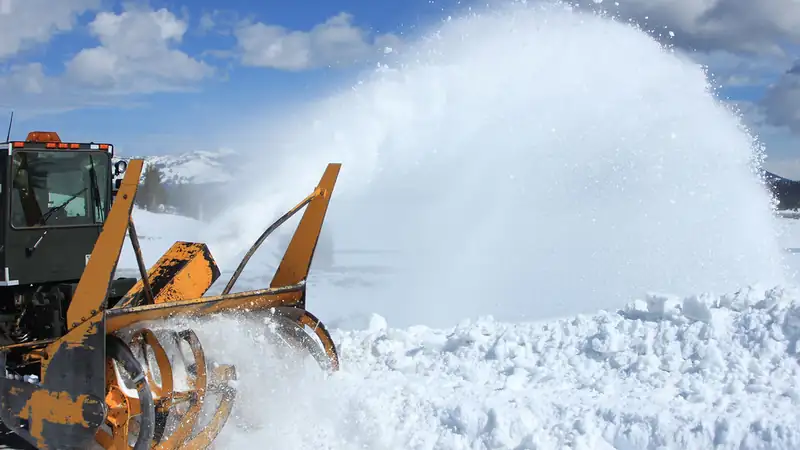
Break-even on the two-stage tier is almost embarrassing: a $1,200 machine against $700 gross storms pays for itself in two storms — most of a single decent December. That's the best equipment math of any hustle on this site. The plow tier is a different animal: it clears three times the route at truck speed, but it welds your winter to a vehicle, mounts, hydraulic maintenance, and the commercial auto policy your personal insurer will not be covering you without. Plow money is real; it's just business money, not weekend money.
Per-push vs. seasonal: who's holding the risk
The pros hedge by stacking both — a base of seasonal contracts that covers the equipment and insurance no matter what the sky does, plus per-push customers as the upside. And every seasonal contract needs three sentences in writing: what counts as a plowable event (2″+ is standard), how many visits are included, and when you arrive relative to end-of-snowfall. The pricing-formula discipline applies double here, because your "billable fraction" in a snowstorm — drive time between jobs, machines that won't start at 5°F — is worse than any summer number.
The salt line: small bags, real margin
Ice management is the quietly profitable half of the business, and beginners leave it on the truck. Rock salt runs $6–$12 per 50-lb bag at big-box stores in the fall (double that during a storm rush — buy in October, another reason this article publishes now), and a typical driveway-and-walks application uses maybe $3–$5 of product while billing $15–$30 as a line item. Calcium chloride costs two to three times more per bag but works below the ~15°F floor where rock salt quits — carry one bag of each and charge accordingly. Two cautions that keep the margin honest: salt eats concrete that's under a year old and torches lawns at the edges, so ask before the first application and use the pet-safe blends where it matters; and never bill for "salting" you did onto packed ice you didn't scrape first — it doesn't work, and callbacks in this business happen at the same hour the storms do.
The parts nobody posts
The work arrives at 3 a.m. or not at all. Driveways must be clear before commutes; commercial lots before opening. A 6″ overnight storm means your route runs 3–8 a.m., in the dark, at 12°F, possibly again that afternoon. This is the highest-paying alarm clock you will ever hate.
Your back is the cheapest thing to destroy. Heavy wet snow runs 15–20 lb per shovelful, and ER visits spike after every major storm. The blower isn't gear vanity — it's the difference between a season of income and a season of ibuprofen. Shovel tier is for testing demand, not for running a route.
The income is a lump, not a stream. Freelance winters need the tax set-aside and a budget that survives a warm January. Snow money is great money that cannot be scheduled — treat it as bonus over a base, never as the rent check.
Build the winter route in October
Before the first flake
- Offer every summer mowing customer a winter contract this month — the route is the asset, and it's sitting in your phone already.
- Pick the pricing mix: seasonal contracts to cover gear and insurance, per-push for upside.
- Put the trigger depth, included visits, and timing promise in writing on every contract.
- Buy the two-stage used or on clearance; test-start it in October, not at 3 a.m. in December. Stock a spare shear-pin set and fresh fuel.
- Confirm with your insurer — in writing — that snow and ice operations are covered.
- Map the route by drive minutes in snow (double summer times) and cap it at what one machine clears by 7 a.m.